Yes, you can ship a real Mac app with an AI pair programmer, but not by trusting it. The AI got Marqee to a working 2,830-line prototype fast and never tired of boilerplate, yet it wrote a confident security bug that a review caught. Treat AI output as a draft to review, cover the important logic with tests, and you can ship faster than working alone.
- AI was great at speed and stamina: scaffolding, boilerplate, and wiring up unfamiliar macOS APIs.
- AI was dangerous at being confidently wrong, including a real security bug and platform-specific behavior.
- Marqee's triage core has 25 unit tests, and a real review caught the bug before any user did.
- Worth doing again with the same guardrails: AI output is a draft, not an answer.
The AI wrote a security bug. It was proud of it, in the way these things are, fluent and confident and completely wrong. A review caught it before a single user did. That's the sentence I want you to remember from this whole post.
I built and shipped a Mac app called Marqee mostly by pair-programming with an AI, and I want to give you the honest accounting, not the hype version. The AI got me from nothing to a working 2,830-line prototype faster than I could have alone. It also would have shipped a bug that read your clipboard wrong if I'd trusted it.
Both of those are true. Neither one is the headline people want. Here's the ledger.
What was the AI actually good at?
Getting to something that ran, fast, and never getting tired of the boring parts.
Scaffolding, boilerplate, wiring up macOS APIs I'd have spent an afternoon looking up: this is where an AI pair programmer earns its seat. It turned "I want the notch to pin a card when a VIP texts" into runnable Swift in minutes. It never sighed at a tedious refactor. For momentum on a solo project, that's the difference between shipping and stalling out in week three. If your bottleneck is starting, it dissolves the bottleneck.
Where was the AI useless or wrong?
Anywhere being confidently wrong is expensive. Which, in software, is everywhere that matters.
It wrote a real security bug and was happy with it. It struggled with anything that needed the whole system held in its head at once. It tripped on macOS-specific behavior that isn't well represented in its training. And it was fluent the entire time, which is the dangerous part, because fluent reads like correct until you check. Left alone, it would have shipped something that looked finished and wasn't.
 marqee
Only your marquee people make the marquee.
The one text you'd never want to miss, surfaced the moment it lands. Everyone else waits where they landed.
Get notified at launch Launching soon. One email when it ships.How do you keep an AI-built app honest?
Tests and review, the same way you keep any code honest, applied with more suspicion, not less.
The triage logic, the rules that decide who's a VIP, what's a login code, what counts as an emergency, lives in a pure core with 25 unit tests. Those are the rules my marketing makes promises about, so they had to provably work. One test asserts that "911 Main Street" in an address never fakes an emergency. The security bug got caught because the build got a real review instead of a rubber stamp. The AI made the writing faster. It didn't make the reviewing optional. If anything it made review more important, because the code shows up looking done.
Would you build with an AI pair programmer again?
Yes, without hesitation, and with exactly the same guardrails.
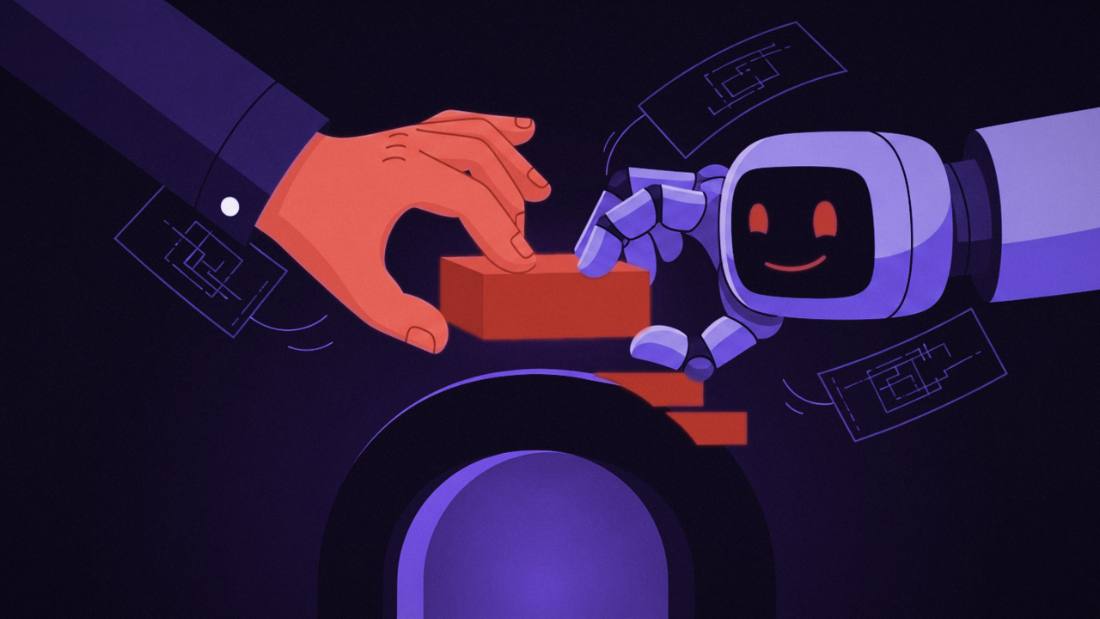
The takeaway isn't "AI writes your app for you," and it isn't "AI is overhyped." It's that an AI pair programmer is a fast, tireless, occasionally wrong collaborator, and it's worth a great deal if you treat its output as a draft to review, not an answer to trust. I shipped a real, tested, notarized Mac app faster than I could have alone. I also caught a security bug it wrote. Those two facts aren't in tension. They're the whole story.
What did you actually build?
Marqee, a Mac notch app that decides who's allowed to interrupt you. Your chosen people, your login codes, and true emergencies reach you. Everything else waits. It's the thing all that pair-programming was in service of. If the build story is what brought you here and the app happens to solve a problem you have, there's a free trial. If not, I hope the ledger was worth your time on its own.
Wilton E. Blake, II makes Marqee and runs answer-engine optimization audits for a living.

Wilton E. Blake, II makes Marqee and runs answer-engine optimization audits for a living.
FAQ
Can you really ship a real Mac app with an AI pair programmer?
Yes. I shipped Marqee, a signed and notarized Mac app, pair-programming mostly with an AI. It got me to a working prototype fast, but shipping still took real review and tests, including catching a security bug the AI wrote.
What is an AI pair programmer good at?
Speed and stamina: scaffolding, boilerplate, wiring up unfamiliar APIs, and turning an idea into runnable code quickly. It's strongest at getting a working first draft and tireless on tedious work.
What is an AI pair programmer bad at?
Being reliably correct where it counts. It can write confident, fluent code that's wrong, including security bugs, and it struggles with whole-system reasoning and platform-specific behavior. Its output needs review, not trust.
How do you make AI-written code trustworthy?
Treat every output as a draft, review it seriously, and cover the important logic with tests. In Marqee, the triage rules live in a core with 25 unit tests, and a review caught a security bug the AI had been happy with.
Did the AI write the whole app?
No. It wrote a lot of the first drafts and handled the tedious parts, but the architecture decisions, the review, the tests, and the fixes for what it got wrong were mine. It's a pair programmer, not a replacement.